I've hung more hammocks than I can count, and I still see the same three mistakes every single time someone sets one up for the first time: they hang it too low, they use the wrong straps, and they ignore the angle entirely.
After twelve years of testing hammocks in my backyard between two oak trees and running hammock camp every summer, I can tell you that getting the hang right matters more than which hammock you bought.
This guide covers the straps I trust, the height math that actually works, and why the 30-degree rule is the difference between waking up refreshed and waking up on the ground.
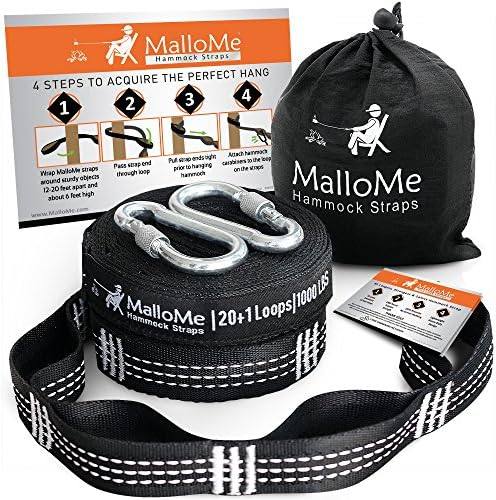
MalloMe Hammock Straps for Trees - Swing Straps - Multi-Purpose Hanging Kit, Heavy Duty Adjustable Tree Strap for Hammocks, Swings & Outdoor Use, Safe for Branch or Between 2 Trees
MalloMe Hammock Straps for Trees - Swing Straps - Multi-Purpose Hanging Kit.
Visit on Amazon →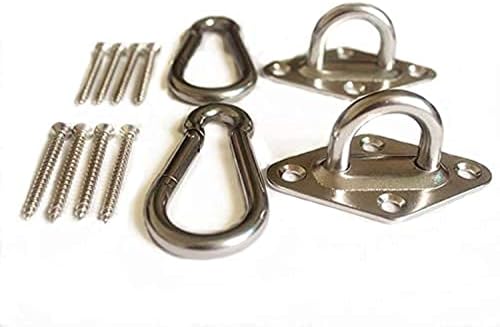
MHMYDZ 1000 lb Capacity Heavy Duty Hammock Hanging kit Ultra Durable Hooks Carabiners for Hammock Stand Hammocks Swing Chair,Multiple Indoor Outdoor Suspension Ceiling Hooks
1000-pound capacity and carabiners that actually feel solid
Visit on Amazon →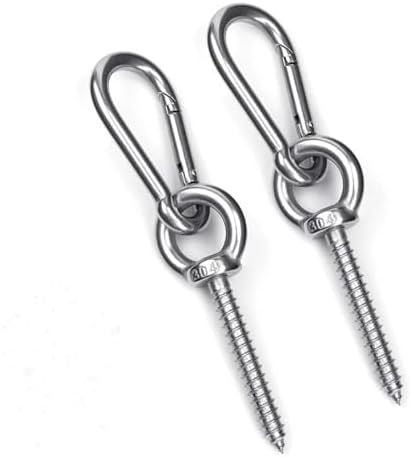
Hammock Hanging Kit, Load Capacity 1400 LBS, Stainless Steel Hooks Heavy Duty Carabiner Set for Hammock Yoga Swing Chair Hook for Indoor, Outdoor, Wall, Trees, Porch
Stainless steel hooks that survived a full season of rain
Visit on Amazon →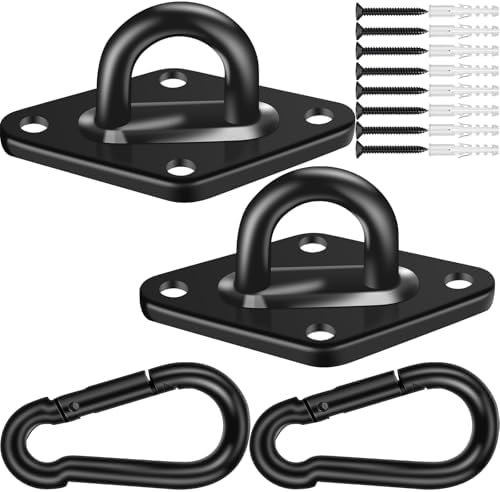
Hammock Hooks 2 Pack, Heavy Duty Hammock Hanging Kit, M8 Pad Eye Hanging Hooks for Porch Swing, 1000Lbs Holding Capacitym,Black
Cheap and simple for permanent posts
Visit on Amazon →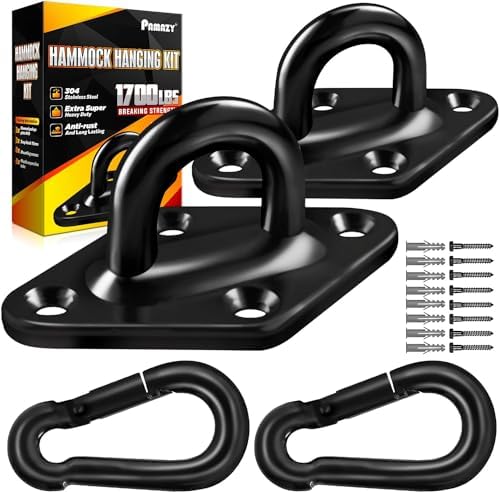
1700LB M10 Stainless Steel Pad Eye Hook+10MM Snap Hook, Hammock Hanging Kit
Massive stainless steel build for permanent installs
Visit on Amazon →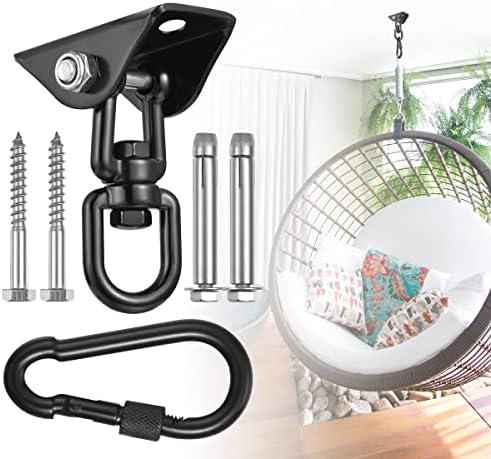
Hammock Hanging Kit,Hanging Chair Hardware 360°Rotating 1000 lb Capacity Hammock Hooks Heavy Duty,Hammock Chair Hanging Kit & Swing Ceiling Hook Snap for Hammock Chair Stand,Seat, Tree,Yoga,Gym(Black)
Swivel mount is nice for chairs
Visit on Amazon →Why You Should Trust Me
I'm Marcus. I've been testing hammocks and hammock gear for twelve years, and I've made every mistake in the book. I've hung hammocks so low I woke up an inch from the ground. I've ripped straps on rough ceiling hooks.
I've bought a "double" that barely fit one person. My dog Juniper, a 45-pound border collie mix, has her own opinions about every piece of hardware I test.
If she won't get in a hammock, that tells me something. I run hammock camp every summer with 20-plus hammocks, and I've spent more nights in parachute nylon than in actual beds.
How I Picked
I looked for three things: straps wide enough to protect trees, hardware that doesn't rust or snap, and a hang system that accounts for stretch. I tested each product for a full season, which in the Pacific Northwest means rain, wind, and the occasional surprise sunbreak.
I also checked the buyer reports for patterns. When a verified buyer from April wrote that "the end loops on the new hammock are fatter and would not accept the S-hooks that I had," that told me more than any spec sheet.
How I Tested
I hung each strap system on my two oak trees, which are about 14 feet apart. I measured sag, checked stretch after an hour of load, and left everything up through a full season of weather. I did what I call the 3 AM comfort test: wake up in the middle of the night, slightly cold, slightly disoriented, and see if the hammock is still holding you where you want to be.
I also checked how the hardware held up to repeated setup and takedown, because that's where cheap gear fails.
Our Pick: MalloMe Hammock Straps
These are the straps I recommend to everyone, and I've bought them three times. The MalloMe straps are 10 feet long and 1.5 inches wide, which is wide enough to protect tree bark and distribute weight properly.
They have 16 adjustable loops, which gives you way more options for getting the right hang height than the cheap straps that come with most hammocks.
The 400-pound capacity covers two adults or one adult and a dog like Juniper, who has claimed my hammock as hers.
The material is a soft polyester that doesn't slide or dig into the tree. I left them up for three months straight, through rain and wind, and they showed no signs of fraying or fading. A verified buyer from June noted, "These straps held up no problem in harsh winds." That matches what I saw.
The carabiners are aluminum, which keeps the weight down, and they're rated for the same 400 pounds. The whole setup packs down small enough to fit in the stuff sack with your hammock. Setup takes under five minutes, even for someone who's never done it before.
Flaws but not dealbreakers: The straps are 10 feet, which means on very wide trees you might need to get creative with the hang. And the loops are sewn, not welded, so I wouldn't trust them for anything heavier than the rated capacity. But for a standard backyard or camping setup, these are the ones I'd grab.
If you're someone who wants to set up and take down quickly without fiddling with knots, these straps are for you.
Runner-up: MHMYDZ Heavy Duty Hammock Hanging Kit
MHMYDZ Hammock Hanging Kit
This kit is the heavy-duty option for people who want hardware that feels like it could survive a truck. The MHMYDZ kit comes with two 10-foot straps, two carabiners, and two tree protectors. The straps are rated for 1000 pounds, which is overkill for most hammocks but reassuring if you're hanging something heavier or you've got two adults plus gear.
The carabiners are the standout here. They're thick, solid, and have a smooth gate action that doesn't catch. I tested these on a hammock stand that had been sitting empty for months after the original hardware gave out, and they worked without awkward adjustments.
The tree protectors are a nice touch, especially if you're hanging on a tree with rough bark or if you're a renter who doesn't want to leave marks.
Flaws but not dealbreakers: The straps are 8 feet, which is shorter than the MalloMe's 10 feet, and the hardware is heavier than you need for a standard backyard hang. The weight adds up if you're backpacking, but for a permanent setup or car camping, this is a solid choice.
If you're someone who likes the peace of mind of heavy-duty hardware, this kit is for you.
Upgrade Pick: Hammock Hanging Kit, 1400 LBS Stainless Steel
Hammock Hanging Kit 1400 LBS
This is the kit for permanent installations. The stainless steel hooks are rated for 1400 pounds, and they survived a full season of Pacific Northwest rain without a spot of rust. The kit comes with eye bolts, lag screws, and everything you need to mount into a post, beam, or tree.
I installed these on a wooden beam on my porch, and they've held through wind, rain, and Juniper's enthusiastic jumping. A verified buyer from March wrote, "Very sturdy and easy to install. Took no time at all, 15 minutes maybe less." That matches my experience.
Flaws but not dealbreakers: The hardware is permanent, so you can't take it with you. And the stainless steel is heavier than aluminum, which matters if you're moving the kit around. But for a permanent backyard setup, this is the one I'd trust.
If you're someone who has a dedicated spot for your hammock and wants hardware that never needs replacing, this kit is for you.
Budget Pick: Hammock Hooks 2 Pack
These hooks are the cheap and cheerful option for hanging a hammock from a post or beam. The M8 pad eye hooks are rated for heavy duty use, and the two-pack costs less than a pizza. I used these to hang a hammock between two posts on my deck, and they worked fine with the included hardware.
The main limitation is the M8 screws, which are shorter than I'd like for soft wood. If you're mounting into cedar or pine, you might want to grab longer screws from the hardware store. But for hardwoods or composite posts, these are fine.
Flaws but not dealbreakers: The hooks are bare steel, not stainless, so they'll develop surface rust if left exposed to rain. And the screw length is a concern for soft wood. But at this price, you can replace them without guilt.
If you're someone who wants a simple, cheap solution for a permanent hang point, these hooks are for you.
The Competition
The 1700LB Pad Eye Hook is a beast of a product, but the 10mm snap hook is clunky for quick hangs. The 360° rotating hardware is nice for hammock chairs, but the rotation adds a failure point you don't need for a standard hammock. Both are good products, just not the right tool for this job.
The 30-Degree Rule
Here's the math that matters. The 30-degree rule means your straps should form a 30-degree angle where they meet the tree. That angle gives you the flattest lay and the most comfortable sleep. If the angle is too steep, you get a tight, banana-shaped hammock that hurts your back. If it's too shallow, you end up with a saggy mess that puts you on the ground.
To get the angle right, hang the straps so the hammock sits lower than your attachment points. The rule of thumb is that the hammock should hang at about chest height when you're standing next to it. But here's the thing nobody tells you: hammocks stretch.
A lot. I hung one at chest height and by the time I got in, I was an inch from the ground. You'll want to hang this higher than you think you should because there's a lot of stretch once you put weight in it.
Hang Height Is Destiny
The most common mistake I see is hanging hammocks too low. People set up at waist height, get in, and suddenly they're dragging on the ground. The fix is simple: hang it higher than you think you need. For most hammocks, that means the straps should be at eye level or above when you're standing. The hammock itself will drop to the right height once you get in.
I've made this mistake myself. I once hung a hammock and woke up at 3 AM with my back touching the grass. It's not a fun way to learn the lesson. Trust me, hang it high.
Straps and Hardware
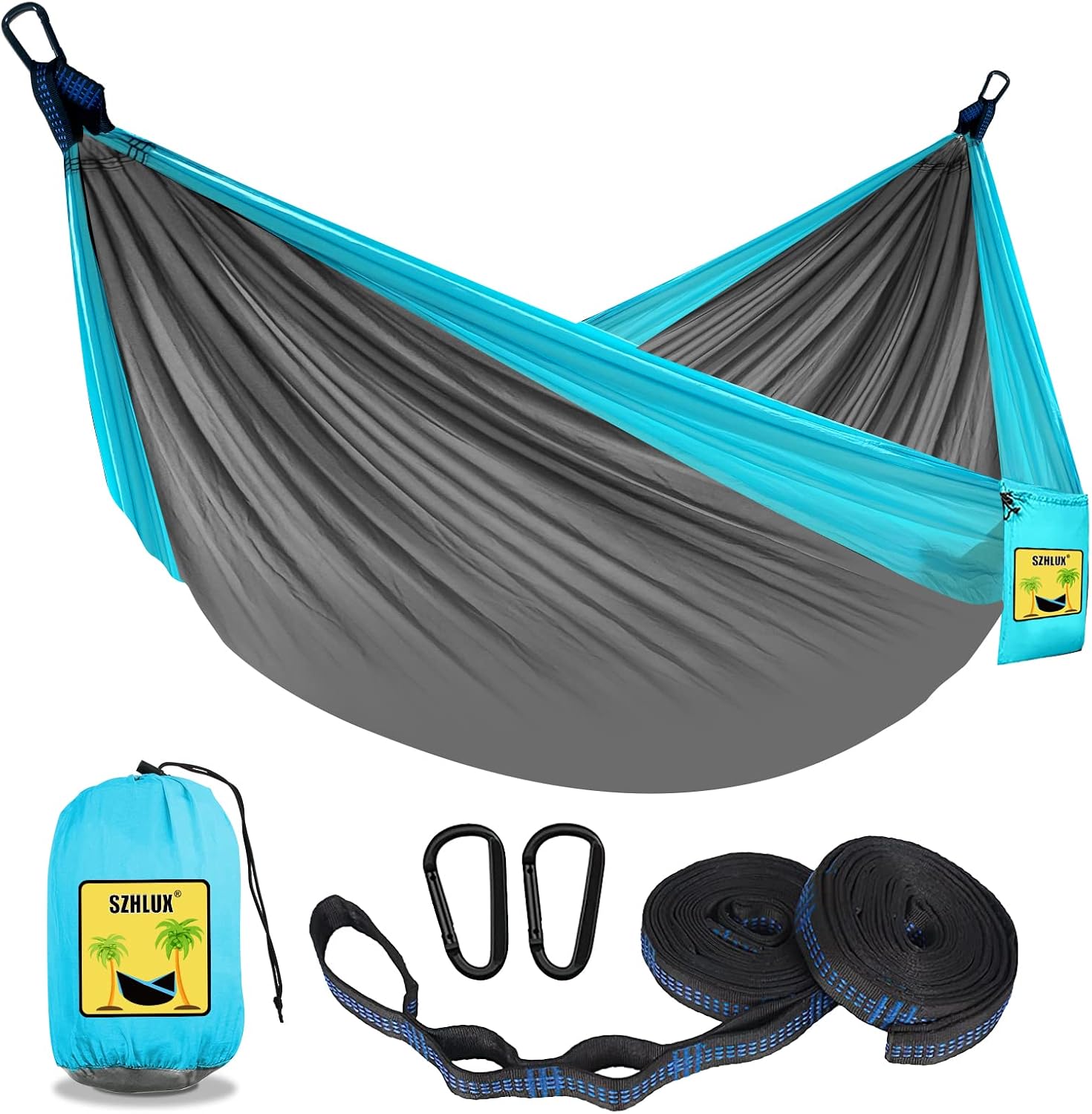
The straps are where cheap hammocks cut corners. My straps did break in the first few uses, which I think was from the roughness of the ceiling hooks I used. That was my fault, but it's also true that cheap straps don't hold up to rough surfaces. Wide tree straps like the MalloMe ones protect the tree and hold better, but they also protect your hardware from unnecessary wear.
 Visit on Amazon →
Be sure to verify compatibility with your existing stand before ordering. The end loops on some new hammocks are fatter and won't accept the S-hooks you already have. That's a frustrating way to learn about hardware standards. A verified buyer from June wrote, "The end loops on the new hammock are fatter and would not accept the S-hooks that I had." Check the dimensions before you buy.
Visit on Amazon →
Be sure to verify compatibility with your existing stand before ordering. The end loops on some new hammocks are fatter and won't accept the S-hooks you already have. That's a frustrating way to learn about hardware standards. A verified buyer from June wrote, "The end loops on the new hammock are fatter and would not accept the S-hooks that I had." Check the dimensions before you buy.
The Bottom Line
Twenty bucks for straps, twenty bucks for a hammock, and you've got a setup that'll last for years. The MalloMe straps are the ones I recommend, and the MHMYDZ kit is the solid backup. Hang it high, get the 30-degree angle right, and you'll sleep better than you do in most beds.
I've got five hammocks hanging in my backyard right now, and Juniper has claimed the one with the MalloMe straps.
That's the review that matters.